Hearing loss in one ear can be surprisingly disruptive. You may find yourself turning your head to catch what someone is saying, or struggling to tell where a sound is coming from. Busy restaurants, car rides, and group conversations can become especially tiring, because your brain has to work harder to fill in what the weaker ear misses.
The good news is that you don’t have to simply live with it. Several effective options can bring sound from your weaker side back into the conversation, and the right choice depends largely on how much usable hearing that ear still has.
What Single-Sided Hearing Loss Means
Audiologists use a few terms to describe hearing loss in one ear. Unilateral hearing loss means one ear has reduced hearing while the other hears within the normal range. When the poorer ear has little or no usable hearing, it's often called single-sided deafness. When both ears have some loss but to noticeably different degrees, the term is asymmetrical hearing loss.
The causes vary widely. Single-sided loss can follow sudden sensorineural hearing loss, a viral infection, Ménière's disease, head trauma, or a benign growth on the hearing nerve called an acoustic neuroma, and some people are born with it.
Sudden hearing loss in one ear should be treated as an emergency, so if you notice a sudden drop in hearing, contact an ENT or urgent care right away, since early treatment can improve the chances of recovery.
Why One Ear Makes Such a Difference
Your brain relies on input from both ears to locate sounds and to pick out speech from background noise. When one ear isn't contributing, your head physically blocks some of the sound coming from the weaker side before it reaches the better ear, an effect known as the head shadow. Soft voices on that side can fade away, and noisy places like restaurants and family gatherings become much harder to follow.
Starting with a Thorough Hearing Evaluation
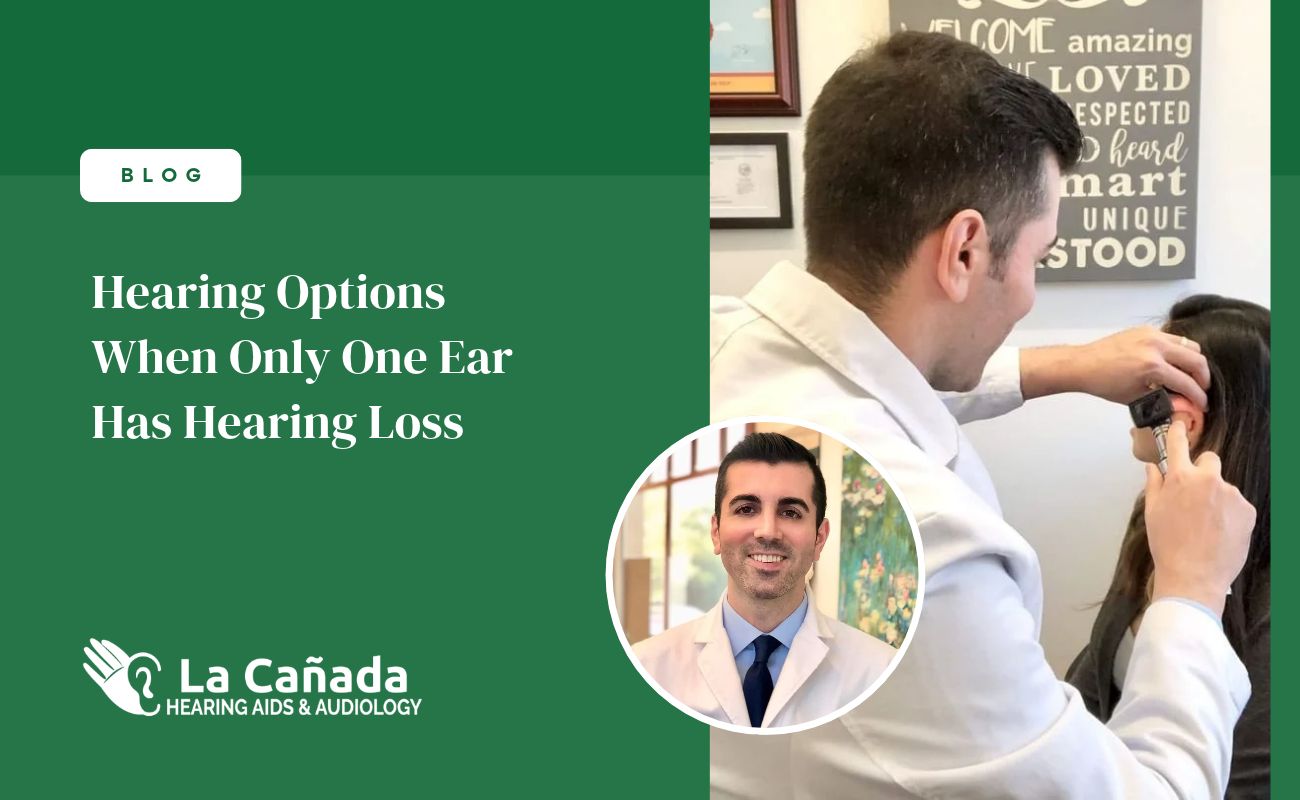
The right solution begins with understanding exactly how each ear is hearing. During a comprehensive evaluation, Audiologist Dr. Kevin Ivory tests each ear separately and plots the results on an audiogram, which shows him whether your hearing loss is asymmetrical between your two ears. Speech recognition testing reveals how clearly each ear understands words, and that score helps show whether the weaker ear can benefit from amplification.
Dr. Ivory also uses the QuickSIN test to measure how well you understand speech in background noise, since that ability can't be reliably predicted from the audiogram alone. If your results point to a condition that needs medical care, he'll refer you to the appropriate physician.
A Single Hearing Aid for the Weaker Ear
When the poorer ear still has usable hearing and reasonably good speech understanding, a single hearing aid is often the first option to consider. Amplifying that ear helps restore balance between your two sides, which may make it easier to hear in noise and tell where sounds are coming from.
How CROS and BiCROS Systems Work
When the weaker ear can no longer make good use of amplified sound, a CROS system (Contralateral Routing of Signal) is a common solution. You wear a small transmitter on the poorer ear that picks up sound from that side and sends it wirelessly to a receiving hearing aid on your better ear. You hear everything through your stronger ear, so a voice on your weaker side is much less likely to be lost in the head shadow.
A BiCROS system works the same way, with one addition. If your better ear also has some hearing loss, the receiving device amplifies sound for that ear while delivering the signal routed from the poorer side.
Several of the manufacturers we work with offer CROS and BiCROS options on their current platforms. ReSound Sensia, for example, offers its microRIE style in models that support single-sided deafness through a CROS transmitter. Keep in mind that a CROS system leaves the hearing in your weaker ear unchanged, so it can't fully restore your sense of where sounds are coming from. For some patients with single-sided deafness, options such as bone conduction devices or cochlear implants may be worth exploring, and Dr. Ivory can provide referrals when they're appropriate.
Explore Your Options in La Cañada Flintridge
At La Cañada Hearing Aids & Audiology, Dr. Ivory works with all of the top hearing aid manufacturers, so he can recommend the single hearing aid, CROS, or BiCROS system that best fits your hearing and daily routine. Our care follows the ListeningBrain® system, a holistic approach built on best practices in hearing care, and routine aftercare visits after your fitting give Dr. Ivory the chance to fine-tune your devices as you adjust.
We welcome patients from La Cañada Flintridge, Glendale, Pasadena, Burbank, and beyond. Call us at (818) 928-1400 to schedule a hearing evaluation and learn which option is right for you.